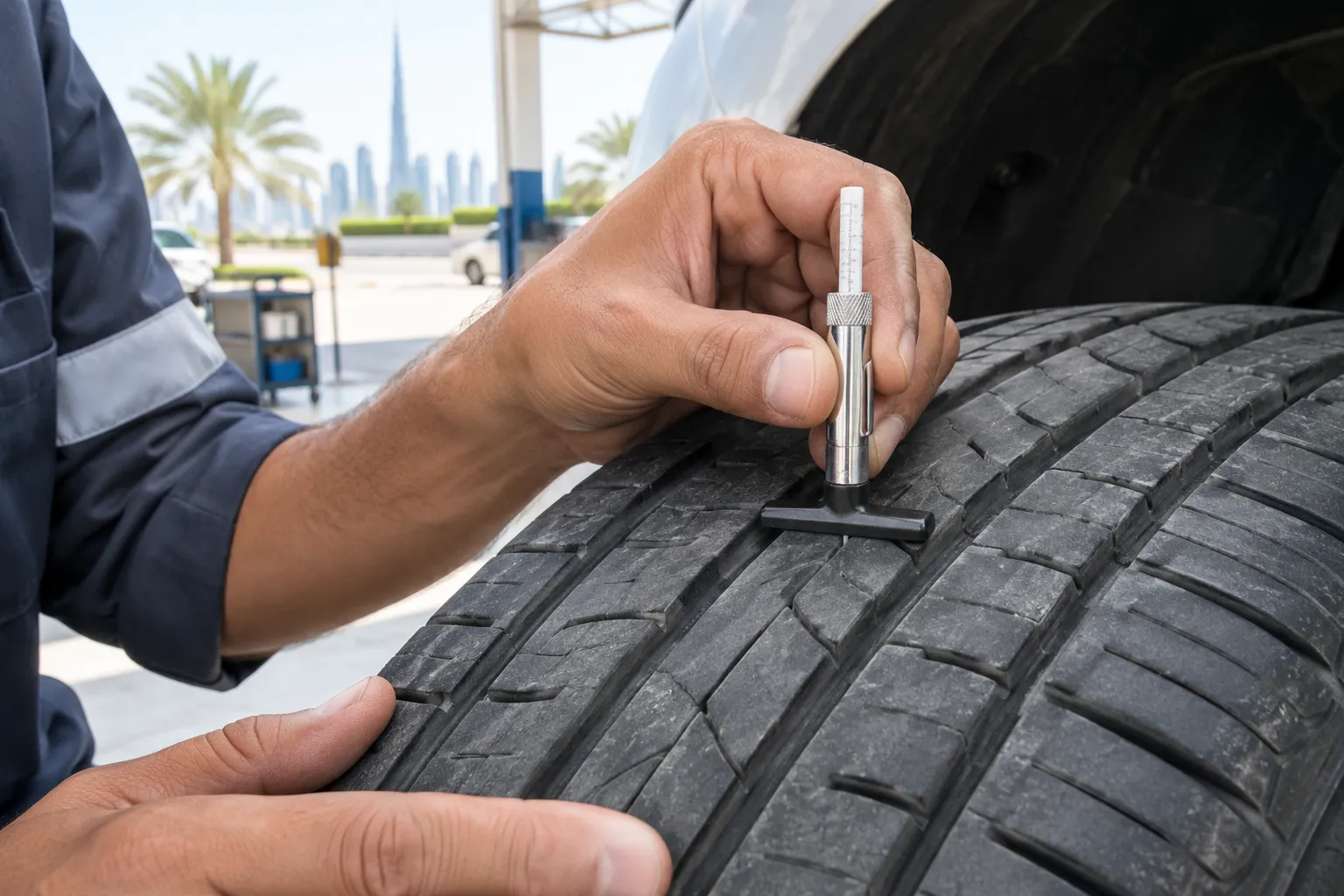
In the UAE a tyre is treated as expired five years after the date it was made, however much tread is left, and an expired tyre fails the vehicle technical test. In practice, many tyres are worn out before then: a typical car doing average mileage gets roughly three to four years from a set, and less if the pressures are neglected through summer.
So there are two clocks running on every tyre: the calendar and the tread. Whichever runs out first decides when you replace it.
The five-year rule, and where it comes from
The RTA has stated that a vehicle won't pass its technical test if its tyres are more than five years past their manufacture date, and Dubai motorists have been reminded of this repeatedly in summer safety campaigns. The rule counts from the week the tyre was made, not the day you bought it, which is why the DOT date matters when you buy.
To find the date, read the four-digit code at the end of the DOT number on the sidewall. We explain it step by step in how to read a tyre DOT code.
Why UAE tyres age faster than the same tyre in Europe
Rubber ages through heat, sunlight and oxygen, and the UAE supplies all three generously. Summer air above 45°C and road surfaces far hotter than that bake the compound, while cars parked outdoors take direct sun on one side of the tyre all day. The result is a tyre that hardens and cracks sooner, and loses grip before the tread looks worn.
- Heat: under-inflated tyres flex more and run hotter, which speeds up ageing and wear together.
- Sun: UV attacks the sidewall surface first. Fine cracks between the tread blocks or on the sidewall are an early sign, covered in tyre ageing and cracking.
- Sand and stone: grit on the shoulder of the road chips the tread and speeds up wear on cars that use it often.
- Long fast runs: sustained speed on the E11 or E311 builds heat, especially with a full load of passengers and luggage.
How many kilometres to expect
There's no single figure, because the compound, the car and the driver all change the answer. The ranges below are what a technician sees in day-to-day work, not a promise from any brand: treat them as a guide to when to start checking closely.
| Situation | What usually ends the tyre first | What to watch |
|---|---|---|
| Low mileage, car parked in the sun | Age and cracking | DOT date, sidewall cracks |
| Average commuting | Tread wear in years 3–4 | Tread depth, especially on the drive wheels |
| High mileage, highway driving | Tread wear, sometimes in under 2 years | Monthly depth checks, rotation |
| Heavy SUV or performance car | Fast shoulder wear | Pressure and alignment |
What makes a set last longer
- Keep the pressure rightCheck monthly, with the tyres cold, against the placard. It is the single biggest factor. See how to check tyre pressure.
- Rotate on scheduleFront tyres wear differently from rears. Rotating every 8,000–10,000 km evens the wear so the set lasts together.
- Fix alignment earlyA car that pulls or a steering wheel that sits off-centre is scrubbing tread off one edge.
- Buy fresh stockA tyre that sat in a warehouse for two years has already used two of its five years. We show the DOT date before fitting.
When to replace, even before five years
- Tread at or near 3 mm, or level with the wear indicator bars
- Cracks you can catch a fingernail in, on the sidewall or between the blocks
- A bulge or bubble anywhere on the sidewall
- Uneven wear that leaves one edge bald
- A vibration that balancing does not cure
If any of these apply, book a tyre replacement and we'll check the DOT date and tread on all four, so you only replace what actually needs it.
Not sure how old your tyres are? Send a photo of the DOT code and we’ll read it for you.
Questions drivers ask
How long are tyres valid in the UAE?
Five years from the manufacture date shown in the DOT code. After that the RTA treats the tyre as expired, and the vehicle fails its technical test even if the tread is good.
Can tyres last 60,000 km?
Some long-life touring tyres on gently driven cars do, but in UAE conditions most drivers see less. Heat, highway speeds and pressure neglect all shorten tread life, and age may end the tyre before the tread does.
Does the five-year rule start when I buy the tyre?
No. It starts from the week of manufacture. That is why you should check the DOT date when tyres are fitted and turn down stock that is already old.
Is a tyre with good tread but six years old safe?
Not in the UAE. The rubber has hardened and it may crack or separate in the heat, and the car will fail its test. Replace it.