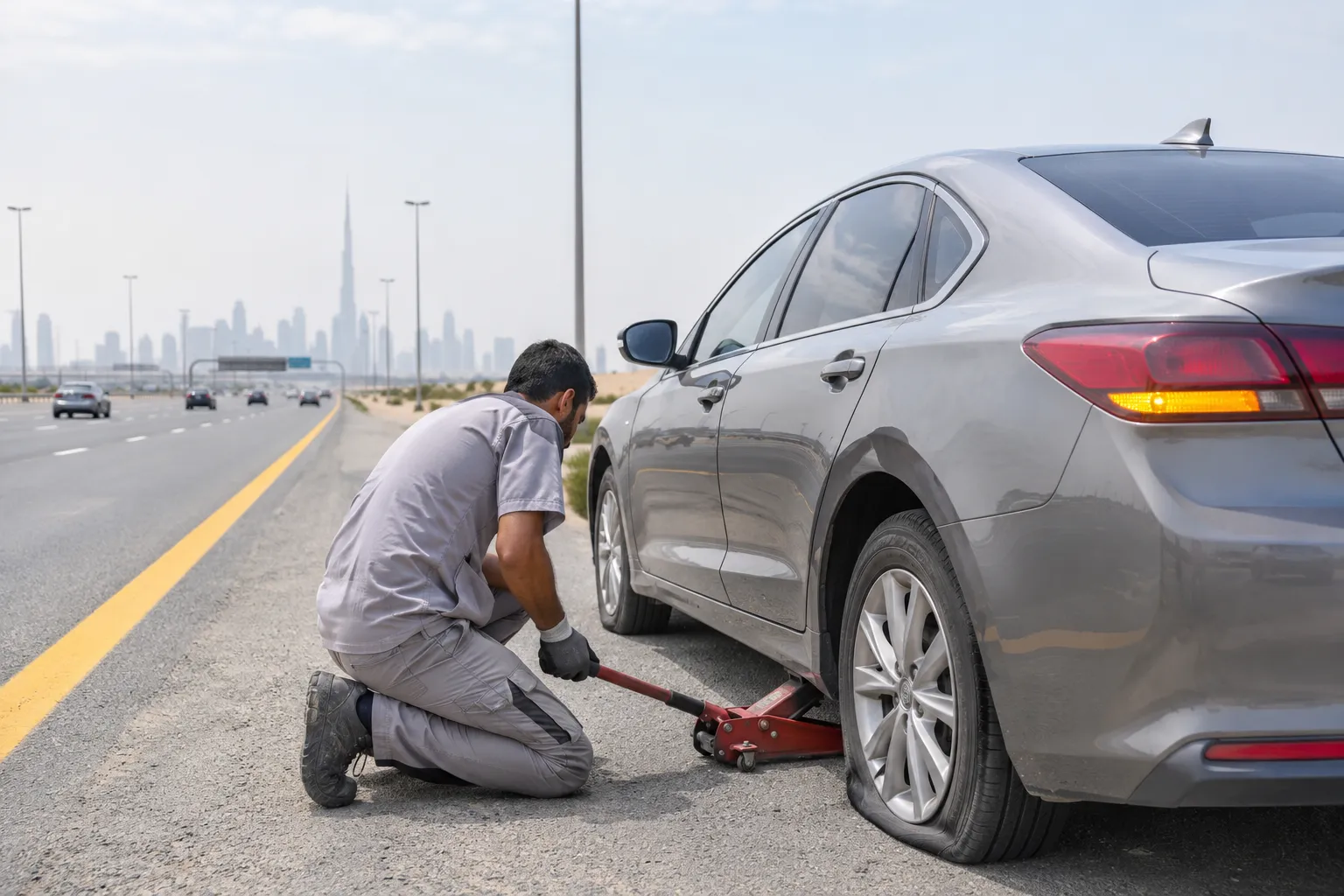
It depends on how fast the air is going. With a slow puncture you can usually drive a short distance, such as to a nearby tyre shop, at moderate speed, as long as you keep the tyre topped up to the right pressure. A tyre that's flat or visibly sagging shouldn't be driven at all: even a few hundred metres can destroy it and damage the rim.
The difference between a cheap repair and a new tyre is usually what happened after the puncture, not the puncture itself.
Slow puncture, fast leak or flat: which do you have?
| Situation | Signs | Can you drive? |
|---|---|---|
| Slow puncture | Loses a few psi a day; tyre looks normal | Yes, a short distance after topping up |
| Fast leak | Visibly lower within minutes; TPMS light; hissing | No; fit the spare or get help |
| Flat | Tyre squashed at the bottom; car pulls or thumps | No; stop where you are, safely |
| Run-flat tyre losing air | TPMS warning; tyre may look normal | Limited distance at reduced speed; see the handbook |
If you're not sure, measure. A tyre more than about 25% below its placard pressure is already flexing and heating far more than it should. Our guide to punctures and slow leaks shows how to spot one early.
What driving on a low tyre does
With too little air, the sidewall folds over at the bottom of every rotation. The folding heats the rubber, rubs the inner liner against itself and can crush the bead against the rim. Inside, a tyre driven flat often shows a grey powdery band and a crease around the sidewall. Once that's there, the tyre can't be repaired, even if the puncture itself was a small nail in the tread.
If you have to move the car
- Inflate firstUse a portable compressor or the nearest air pump to bring the tyre to the placard pressure.
- Leave the nail inIt is often sealing the hole. Pulling it out can turn a slow leak into a flat.
- Drive gentlyKeep the speed down, avoid the highway if you can, and go straight to a repair.
- Check again on arrivalIf the pressure has fallen a lot over a short drive, the leak is faster than it looked. Do not continue.
Or don't move it at all: a mobile puncture repair comes to the car, which saves the tyre more often than not.
Tyre sealant and space-saver spares
- Tyre sealant kits that come with many new cars are a get-you-home measure. Tell the technician you used one: the sealant has to be cleaned out before a proper repair, and some valves or sensors need attention afterwards.
- Space-saver spares are temporary and speed-limited, often to 80 km/h. Check the label on the wheel and do not use one for long highway trips.
- Run-flats let you continue a limited distance at reduced speed, but the tyre is usually replaced afterwards. See can run-flat tyres be repaired.
Stuck with a puncture? Send your location pin and a photo of the tyre, and we’ll come to you.
Staying safe while you deal with it
The tyre is replaceable; you aren't. If the puncture happens on a highway, the hard shoulder is a dangerous place to work, especially at night. Pull as far left as you can, switch on the hazards, get everyone out on the side away from traffic and stand behind the barrier if there is one. Place the warning triangle well behind the car.
- Hazard lights on before you slow right down
- Stop on a straight stretch where approaching drivers can see you
- Passengers out on the safe side, away from traffic
- Do not jack the car on soft sand or a slope
- If changing the wheel feels unsafe, wait for help
We cover this in more detail in a flat tyre on Sheikh Zayed Road, including what to have in the car before it happens.
Questions drivers ask
Can I drive 10 km on a punctured tyre?
Only if it is a slow puncture, kept at the right pressure, and you drive gently. If the tyre loses visible pressure on the way, stop. Never drive 10 km on a tyre that is already flat.
How long can a slow puncture last?
Some leak for days, but a slow puncture can get faster without warning, especially in heat. Repair it within a day or two rather than topping up for weeks.
Is it safe to drive on the highway with a slow puncture?
Avoid it. Highway speeds build heat quickly, and a sudden loss of pressure at speed is dangerous. Use slower roads to reach a repair, or have it fixed where the car is.
Will driving on a flat damage the wheel?
It can. The rim can be bent or scraped once the tyre collapses, and alloy rims crack more easily than steel. That turns a tyre repair into a rim repair as well.